Renewable Energy Engineering
Free engineering training that shows how feasibility studies, production modeling, equipment selection, and electrical and civil design turn a site and an idea into a buildable renewable energy project.

Project Engineering Explained
Engineering in renewable energy translates project opportunities into technical designs that are safe, code-compliant, and economically optimized. Engineers conduct feasibility studies, model energy production, select equipment, and produce the electrical, civil, and structural designs that guide permitting, procurement, and construction.
The Energy Academy shows you how each of these design decisions fits together, so you can see how engineering shapes cost, schedule and performance and where you can contribute.

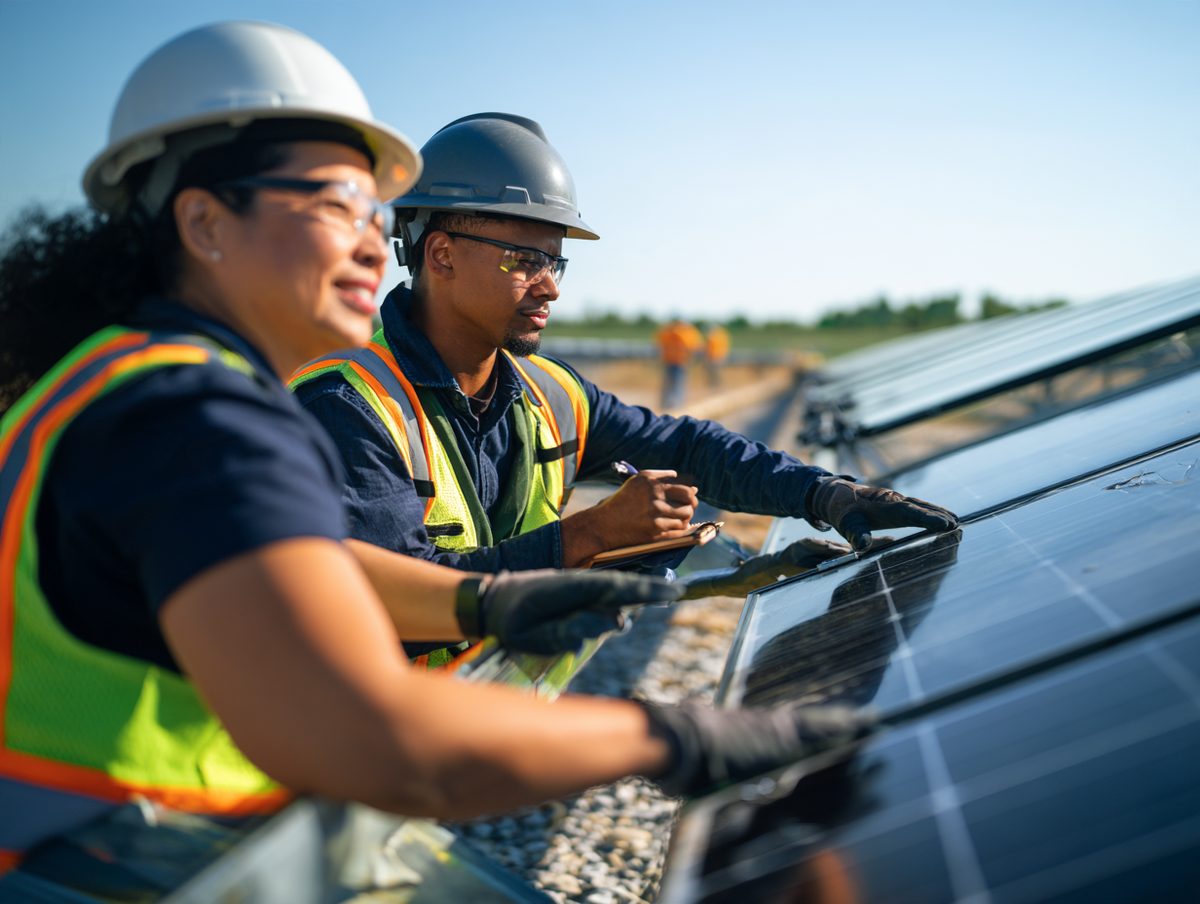
Assess solar resource, site constraints, and expected energy yield to validate project viability.
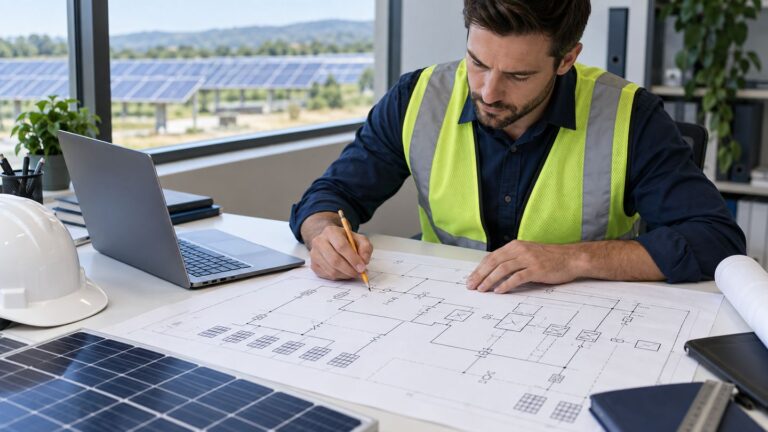
Develop conceptual and detailed layouts, single-line diagrams, and equipment specifications.
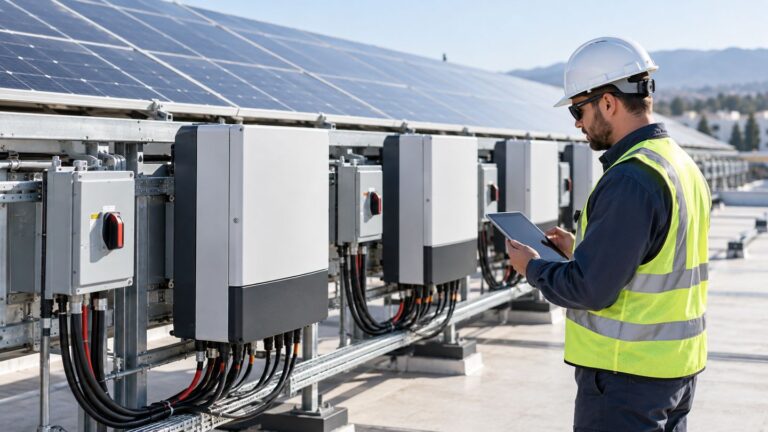
Design wiring, interconnection, foundations, and site infrastructure to applicable codes.
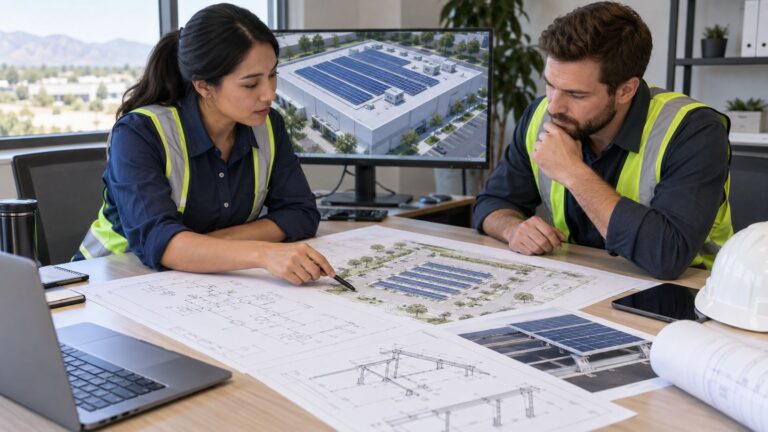
Apply standards, quality reviews, and tools that ensure reliable, buildable designs.
FreeHigh-quality learning for everyone.
Self-pacedLearn on your schedule, anytime, anywhere.
PracticalReal-world insights and examples.
Built by industry professionalsTrusted knowledge from people in the field.
Find Where You Fit
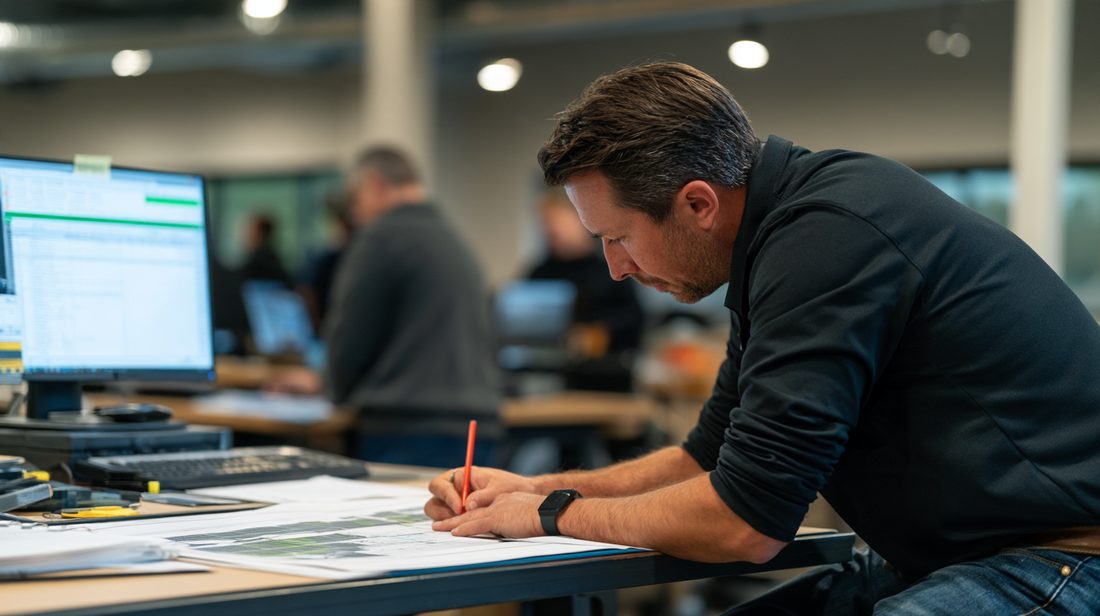
Engineering rewards technical depth, attention to detail and the ability to coordinate with development, procurement and construction teams. Electrical, civil and mechanical degrees are common, and analyst and modeling roles are open to people with strong technical aptitude.

Entry Level
Support modeling, layouts, and calculations under the direction of senior engineers.

Mid Level
Own designs, production models, and equipment specifications for assigned projects.
Senior Level
Lead complex designs, set standards, and review work across projects.

Executive
Define engineering strategy, manage teams, and own technical quality across the portfolio.
From Site Concept to As-Builts
Engineering design matures in stages, and each stage locks in decisions that cost more to change later. Explore the six stages that take a project from a rough concept to a documented, operating plant.
 01
01Review the site, resource data, topography and constraints to prove the location and technology make sense.
 02
02Build a conceptual layout and production model to estimate capacity, energy yield and losses.
 03
03Advance through 30 and 60 percent design as electrical, civil and structural concepts become specific and calculable.
 04
04Check designs against codes, standards and utility requirements through QA/QC and constructability reviews.
 05
05Finalize the drawings and release the Issued for Construction package that procurement and field crews build from.
 06
06Answer RFIs, manage field changes, support commissioning and document what was built in the as-built drawings.
Key Insight
Every design stage locks in decisions — the earlier engineering gets them right, the less the project costs to build.
Start Learning
Start with Solar Engineering 101, then go deeper into production modeling and system components at your own pace.
Free. Self-paced. Built around real industry work.