Renewable Energy Legal & Contracts
Free legal training that shows how site control, offtake, EPC and financing agreements fit together to allocate risk and make renewable energy projects financeable.

Legal Explained
Legal work in renewable energy covers the agreements and frameworks that give developers the right to build and operate projects and that allocate risk among landowners, contractors, offtakers, and investors. From site control through financing, legal professionals structure and negotiate the documents that make projects bankable.
The Energy Academy shows you how these agreements fit together across a project’s life, so you can see where legal work shapes value and where you can contribute.

Structure and negotiate leases, easements, options, and purchase agreements that secure project rights.

Draft and negotiate PPAs, offtake contracts, EPC, and O&M agreements that define performance and payment.

Allocate construction, performance, regulatory, and market risks among the parties best able to manage them.

Navigate permitting, interconnection, tax, and corporate requirements across jurisdictions.
FreeHigh-quality learning for everyone.
Self-pacedLearn on your schedule, anytime, anywhere.
PracticalReal-world insights and examples.
Built by industry professionalsTrusted knowledge from people in the field.
Find Where You Fit
Renewable energy legal work spans paralegals, contracts managers and diligence specialists as well as licensed counsel. Contract literacy, attention to detail and an understanding of project structure carry across every level.

Entry Level
Support diligence, organize agreements, track obligations, and assist with contract preparation.

Mid Level
Draft and negotiate project agreements, manage diligence, and advise development teams.

Senior Level
Lead complex transactions, structure financing documents, and manage outside counsel.

Executive
Own legal strategy, governance, and risk across the organization and portfolio.
From Site Control to Operation
Legal work follows a project from the first land option to its operating years. Explore the six stages where agreements are secured, negotiated and managed.
 01
01Negotiate the options, leases, easements or purchase agreements that give the developer rights to the land.
 02
02Confirm title, zoning and encumbrances, and track the permits and approvals the project needs.
 03
03Negotiate the PPA or offtake contract that secures revenue for the project.
 04
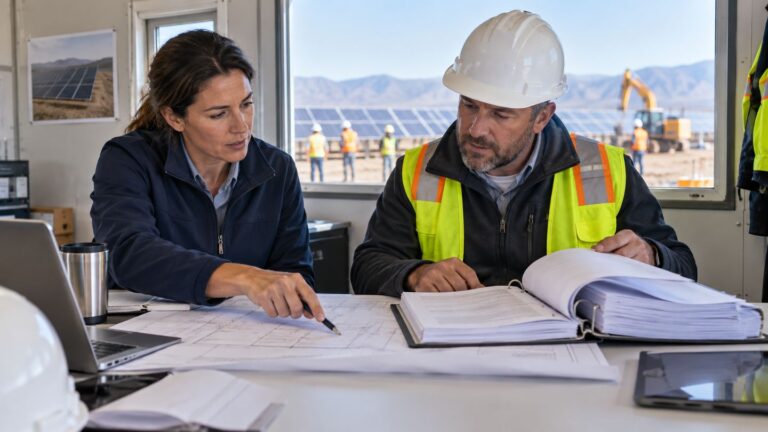
04Draft and negotiate EPC, equipment supply and interconnection agreements that set scope, schedule and risk.
 05
05Complete diligence and financing documents so lenders and investors can commit capital.
 06
06Administer operating agreements, manage compliance and handle amendments, disputes and transfers.
Key Insight
Every stage of a project runs on an agreement — legal work turns plans into enforceable, financeable rights.
Start Learning
Start with Solar Legal 101, then go deeper into site control, PPAs and construction contracts at your own pace.
Free. Self-paced. Built around real industry work.